In September 2025,
Tasmanian Leaders held a 'Leadership Lab' with
Kym Goodes, the
Tasmanian Policy Exchange, and
Gabrielle Appleby to explore how leadership can foster meaningful dialogue and improve outcomes for all Tasmanians. Drawing on the
collective wisdom of the workshop participants, this PIMBY explores how leaders can help create the conditions for more thoughtful conversations, better decisions, and stronger communities.
Many of our most recent PIMBY articles have focused on specific issues that Tassie is currently facing, from budget woes to climate emissions. Here, we turn our attention to something less tangible but equally important: the conversations, relationships, and leadership that determine how effectively we can address those challenges together.
Let's talk about dialogue
Throughout this article, we use the terms ‘leaders’ and ‘leadership’ in the broadest sense. Leadership is not confined to formal positions of authority; it’s something we can all practise and contribute to from many areas and levels of influence.
This reflects a growing recognition that leadership is less about power and hierarchy, and more about enabling others to contribute and create positive change.
Dialogue is often dismissed as ‘soft option’. But in reality, it’s one of the hardest things to do well. Our societies are complex, made up of individuals, communities, organisations, and sectors that all coexist. The value of dialogue lies in its ability to
generate insight and enable change.
Dialogue is the connective tissue of a healthy society. It’s not about everyone agreeing on everything, nor should it be. It’s how we explore those differences without becoming divided. Dialogue allows us to test new ideas and move from conflict toward shared understanding and collective action. When it breaks down, misunderstanding, polarisation, and conflict can flourish – leaving complex problems unresolved. In the words of
Nelson Mandela, “the best weapon is to sit down and talk”.
Dissecting dialogue
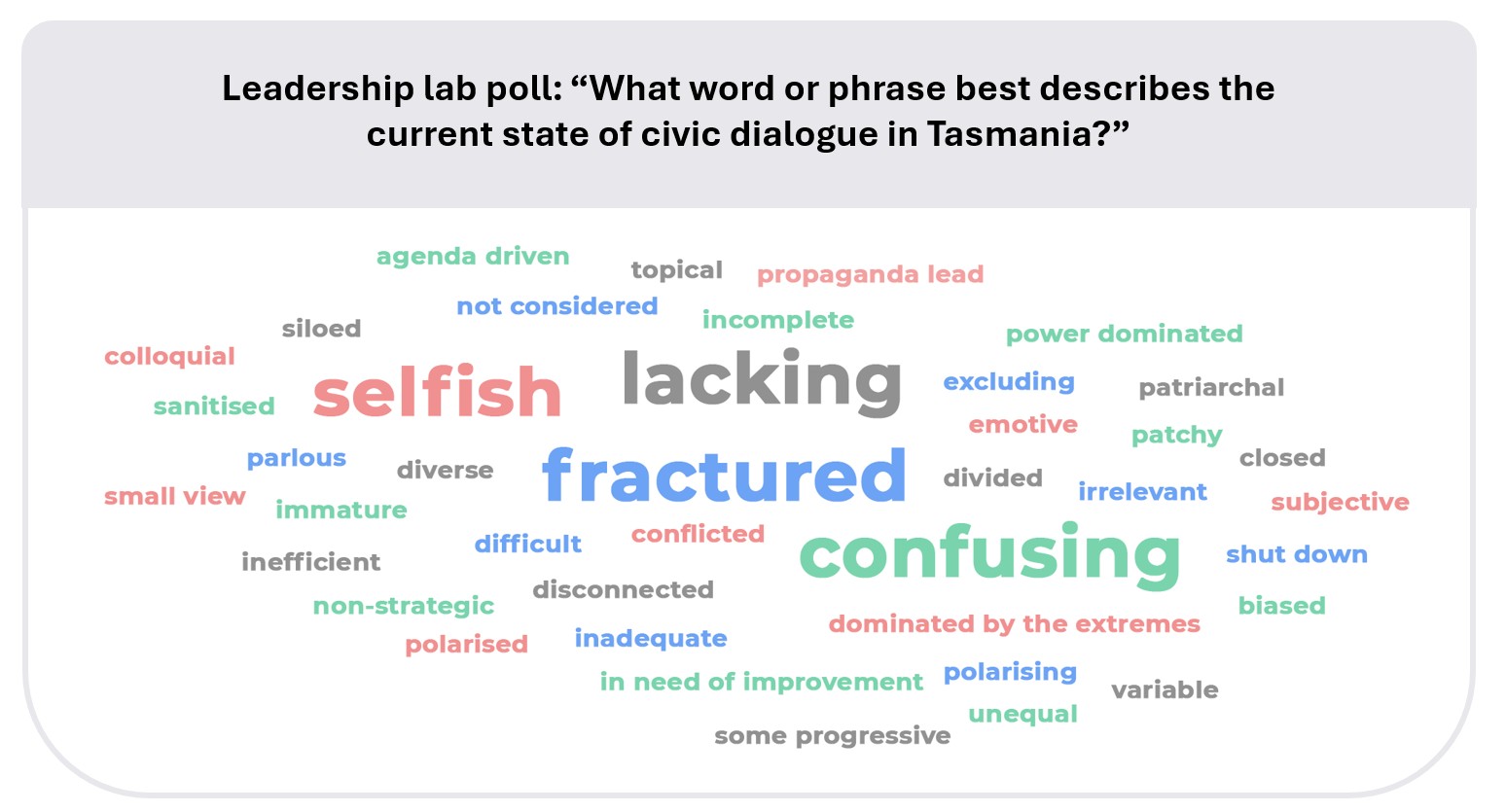
In previous PIMBYs, we’ve talked about Tasmania’s
shifting political landscape and
increasing polarisation. But it’s worth remembering that polarisation can be a sign of people feeling unheard or threatened, of
who is feeling unvalued in society. Leadership can reinforce these divisions or help counter them by
creating the conditions for belonging and social cohesion.
Speaking up is not easy. People justifiably worry about confrontation, their reputations, jeopardising professional opportunities and personal income, and damaging relationships. In a small, highly connected place like Tasmania, these concerns can be overwhelming. Yet the consequences of silence can be terrible:
the Commission of Inquiry into the Tasmanian Government’s Responses to Child Sexual Abuse in Institutional Settings made this clear.
Our conversations too often reinforce existing power dynamics. The same voices are heard repeatedly, while others are silenced because they lack resources, confidence, language, a platform, or political and social capital. This makes our conversations less representative, and may mean we miss out on valuable perspectives that could help us make better decisions as a state.
Another problem is that disagreement often gives way to inaction. But choosing to do nothing often has negative and significant consequences. Important challenges – such as housing supply, education attainment rates, and how to use our state’s natural resources – grow more entrenched, and future generations inherit greater social inequity, systemic failure, and environmental decline. In contrast, tackling the root causes of social and environmental issues as early as possible is almost always
less costly than delaying action.
These issues are often connected:
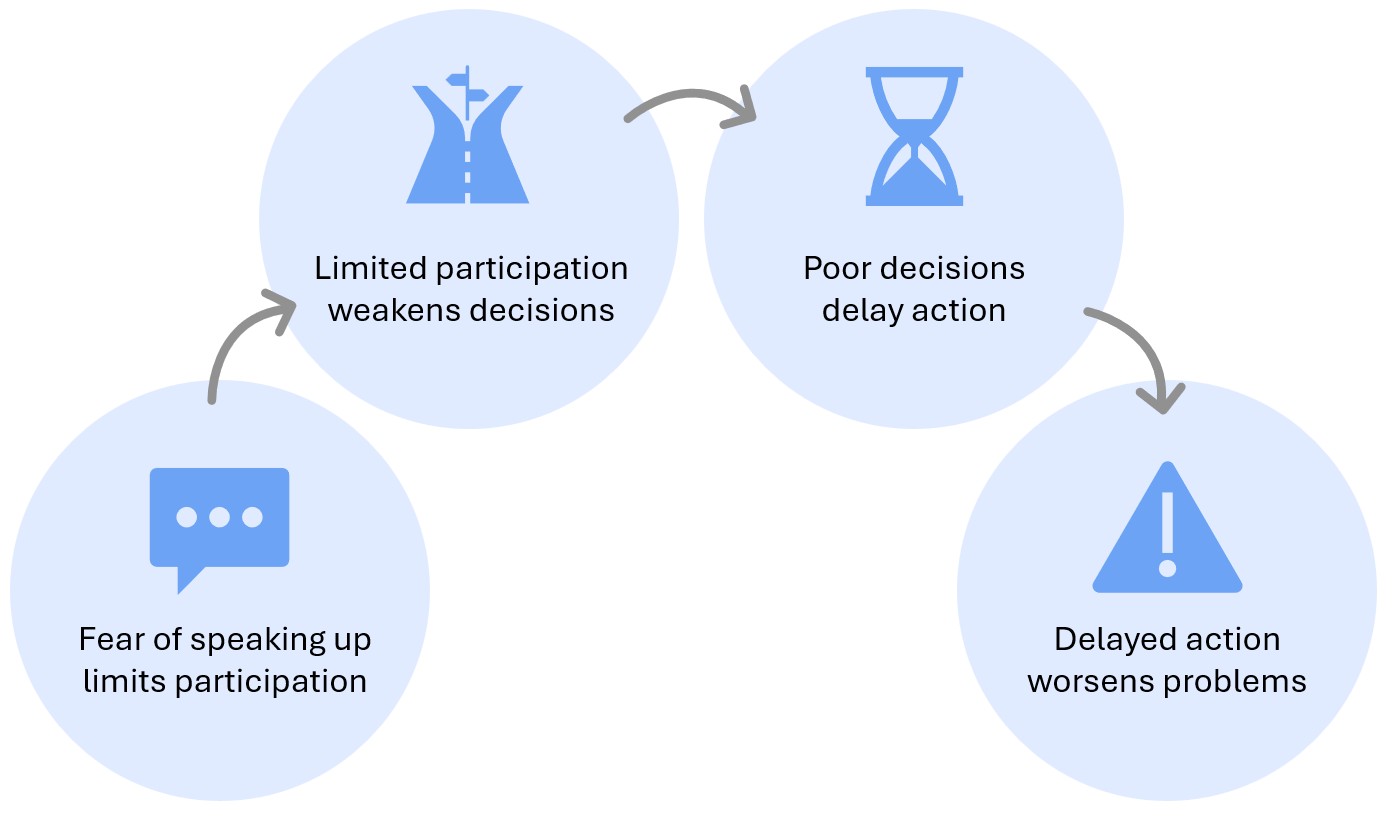
Breaking this cycle in Tasmania requires good leadership at all levels, to facilitate honest dialogue and thoughtful decision-making. We have many strengths to build on, and groups such as Tasmanian Leaders are working towards these goals.
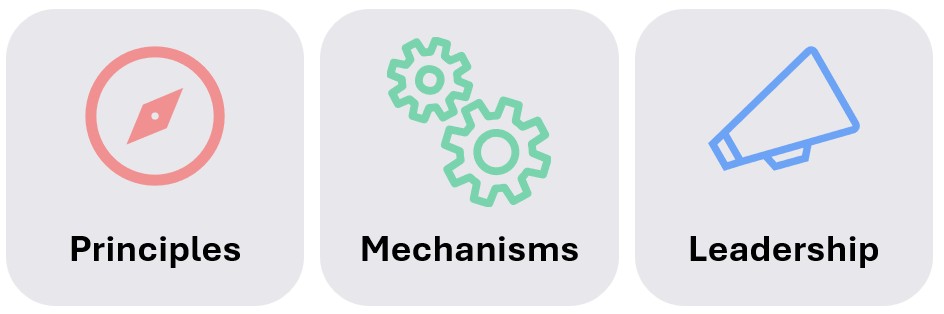
So, how can we encourage dialogue and do it better? Whether in our communities, workplaces or homes, good dialogue doesn’t happen by chance. The Leadership Lab identified three elements that produce good dialogue: the principles that guide the conversation; the mechanisms that support them; and the leadership attributes that bring them to life.
The principles
Good dialogue is about more than just talking – we’ve all walked away from a conversation feeling like it was pointless. It’s about making sure the dialogue is fair, constructive, and worth participating in.
First, there needs to be confidence in the process. As we’ve already mentioned, living well together doesn’t mean agreeing on everything – differences of opinion are inevitable and can often be a good thing. Great dialogue isn’t defined by whether people reach agreement, it’s about whether participants feel like the issues have been explored fairly, openly, and thoroughly. That happens when conversations examine all aspects of an issue holistically (drawing on different forms of evidence and experience), include diverse and even conflicting perspectives, and ask deep questions before jumping to solutions.
Good dialogue is inclusive. Leaders have a responsibility to include those who are too often left out and ensure that people have equal opportunity to voice their opinions and experiences. There also needs to be transparency about how participants are selected and how decisions are made.

Example: It takes a Tasmanian Village
The consultation process to develop
Tasmania's Child and Youth Wellbeing Strategy began by exploring what wellbeing means for children and young people. Then, rather than relying solely on expert opinion, it brought together a broad range of voices, including children and young people themselves.
By starting with the right question (and deliberately involving those most affected in answering it) the consultation demonstrates how dialogue can build confidence in the integrity of the process.
How we approach the conversation is important, too. A strengths-based approach acknowledges challenges without becoming consumed by them. If we start by recognising the capabilities that already exist within individuals, communities, and places, then we can then learn from others and question established ways of doing things. This opens the door to creativity and innovation. After all, there’s nothing productive about believing that Tassie’s most persistent problems are unsolvable.
Finally, good dialogue moves beyond short-term political cycles and band-aid fixes. It learns from the past and considers the long-term consequences of today’s decisions. Around the world, there are some places that have embedded this sort of future-focused thinking into their public institutions.
In Wales, for example, they have appointed a Future Generations Commissioner to help public bodies consider the long-term effects of their decisions, and there have been
calls for the establishment of a comparable position in Australia.

The mechanisms
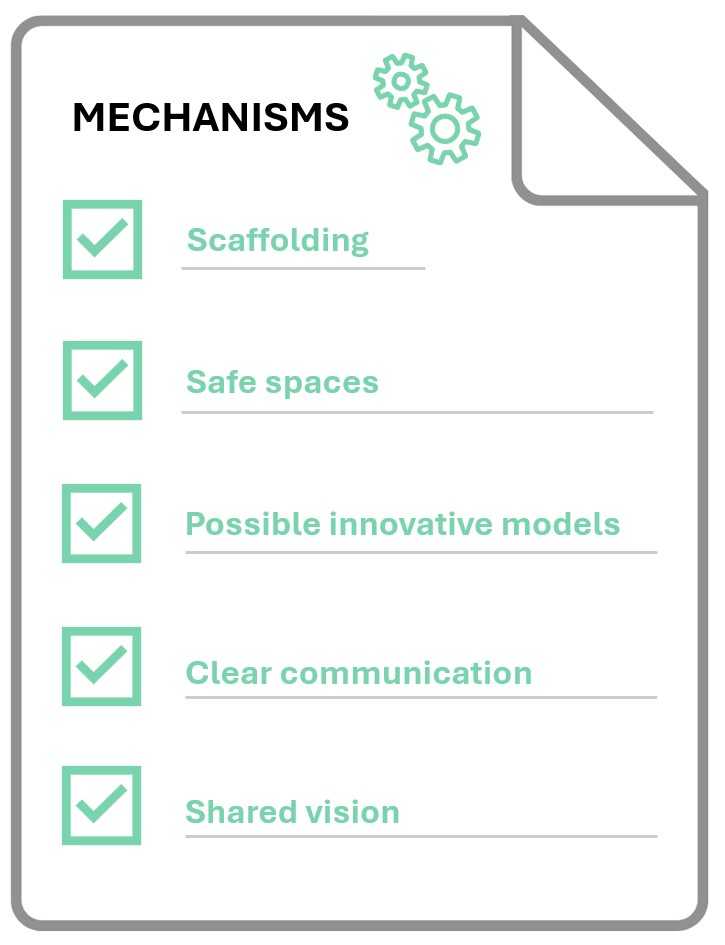
Good intentions alone don’t produce great dialogue. Even when there’s shared willingness, we need the right structures and support. The Leadership Lab identified several practical ways to enable good dialogue.
The first is setting up effective ‘scaffolding’. This means that dialogue has a clear purpose and structure, without being rigid. This can be achieved through facilitation by an experienced person who makes sure there is a clear purpose and shared expectations. A great facilitator can also help people work through disagreements rather than allowing them to descend into a stalemate or be brushed aside.
Where dialogue takes place also matters. It works best when it takes place in a setting that feels safe and puts everyone on an equal footing. This can often mean avoiding spaces that reinforce existing power dynamics or come with historical baggage, such as imposing corporate boardrooms. It might mean using a dedicated '
dialogue common room’, or moving from the office to a picnic bench or yarning circle. A safe space for good dialogue is one where people are treated with
respect, openness, and curiosity.
Next, we can look to innovative dialogue models as tools for supporting collaboration across political divides.
Deliberative democracy and citizens’ assemblies are two approaches that create opportunities for people to engage with complex issues in an informed and considered way.

Example: Braver Angels
Founded in the United States,
Braver Angels is one example of an organisation working to promote dialogue, bridge political divides, and strengthen democracy. Participants aren't expected to persuade one another or to reach agreement. Instead, it's about listening, understanding different perspectives, and identifying common ground.
Last but not least, good dialogue – whether it’s happening in large, public forums or small workshops and meetings – depends on clear and accessible communication methods. Communication in these spaces shouldn’t be about public relations or propaganda, but rather helping people to understand why conversations are happening and how decisions will be made. Honest communication builds trust and supports shared meaning. Another important tool can be establishing a shared vision. Dialogue is much stronger when there’s a common horizon to work towards.
The leadership attributes
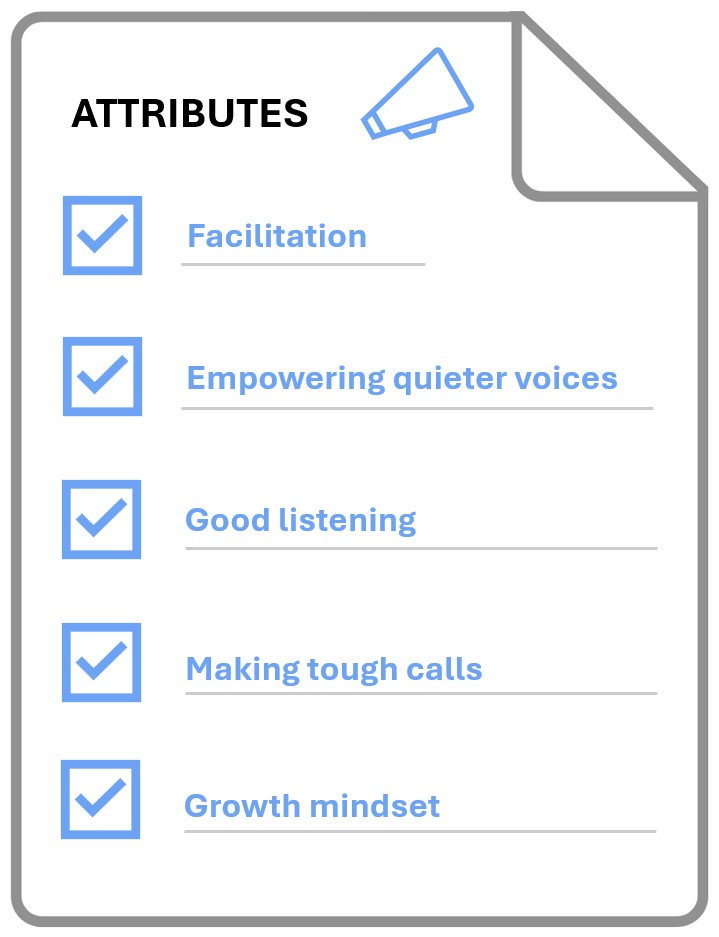
Principles and mechanisms create the conditions for good dialogue, but they don’t guarantee it. Ultimately, dialogue depends on leadership. And Tasmanian leaders need to escape echo chambers, challenge existing narratives, and create positive change.
We need leaders who are facilitators, and focus on elevating others. Skilled facilitators can guide dialogue in ways that promote ideas and purpose, navigate tensions, and ensure respect. Also, facilitating dialogue effectively means empowering quieter voices. It might mean letting go of personal power, foregoing personal interests, or being prepared to fail. In good dialogue, everyone’s beliefs are equal. Where these beliefs are harmful to others, they
must be questioned to understand their origins.
We should look for leaders who genuinely listen.
Good listening means being open to perspectives different from our own and recognising that what works for one person or community may not work for another.

Example: Global leaders
Many recipients of the Nobel Peace Prize have demonstrated the power of dialogue to advance causes in peaceful and productive ways.
Martin Luther King Jr noted:
"People fail to get along because they fear each other. They fear each other because they don't know each other. They don't know each other because they have not properly communicated with each other."
Dialogue is not an end in itself, and at the end of the day, leaders must be prepared to make hard decisions. The important thing is to show that decisions reflect the perspectives of those who have contributed to the dialogue. Leaders also need to demonstrate that they understand how a decision might affect certain people, and what can be done to lessen potential negative consequences.
Finally, good leadership (much like good dialogue) is never finished. It develops through a growth mindset involving
continual learning, reflection, and the deliberate practice of good habits. Leadership is defined by everyday actions that build trust, rather than a single conversation or decision.
Bringing the dialogue to life
The importance of good dialogue is easily overlooked. It might seem intangible or easy to dismiss as little more than common sense. Good dialogue can change the world, but our practice and skills must start at home and in our everyday lives. The principles and practices of dialogue should be reflected in our relationships, exercised in our workplaces, and embraced across our communities until they become a valued part of our civic culture.
Leaders, in turn, should model dialogue that is inclusive, diverse, holistic, hopeful, forward-thinking, and creative. Yet responsibility should not fall solely on individuals. Organisations and institutions (such as Tasmanian Leaders and the University of Tasmania) have an important role in creating the conditions for good dialogue.
We often joke in Tasmania that our six degrees of separation is actually only two degrees. That closeness can sometimes make difficult conversations harder. We may hesitate to challenge ideas, question decisions, or voice a different perspective because it’s all a little too close to home. Yet those same connections can be one of our greatest strengths. Our closeness makes it easier for us to bring people together and make things happen. Let’s find our voice, listen to one another, and have the courageous conversations that Tasmania needs.
Thanks to Tasmanian Leaders, Kym Goodes, Leadership Lab participants, Gabrielle Appleby, and all contributing authors who helped shape the report. .png)



.png)