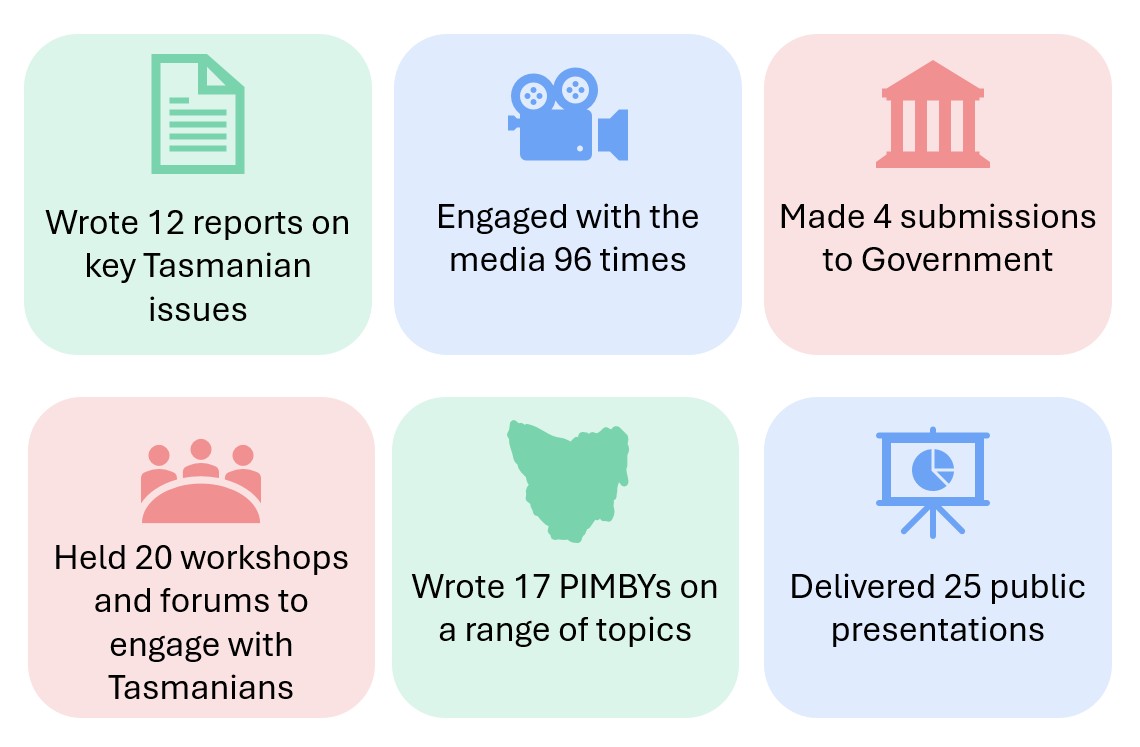
Here's a snapshot of what we got up to this year:
In this article, we’ve highlighted a selection of our projects and some of the key things we learned along the way.
The Productivity Transition
The University of Tasmania has
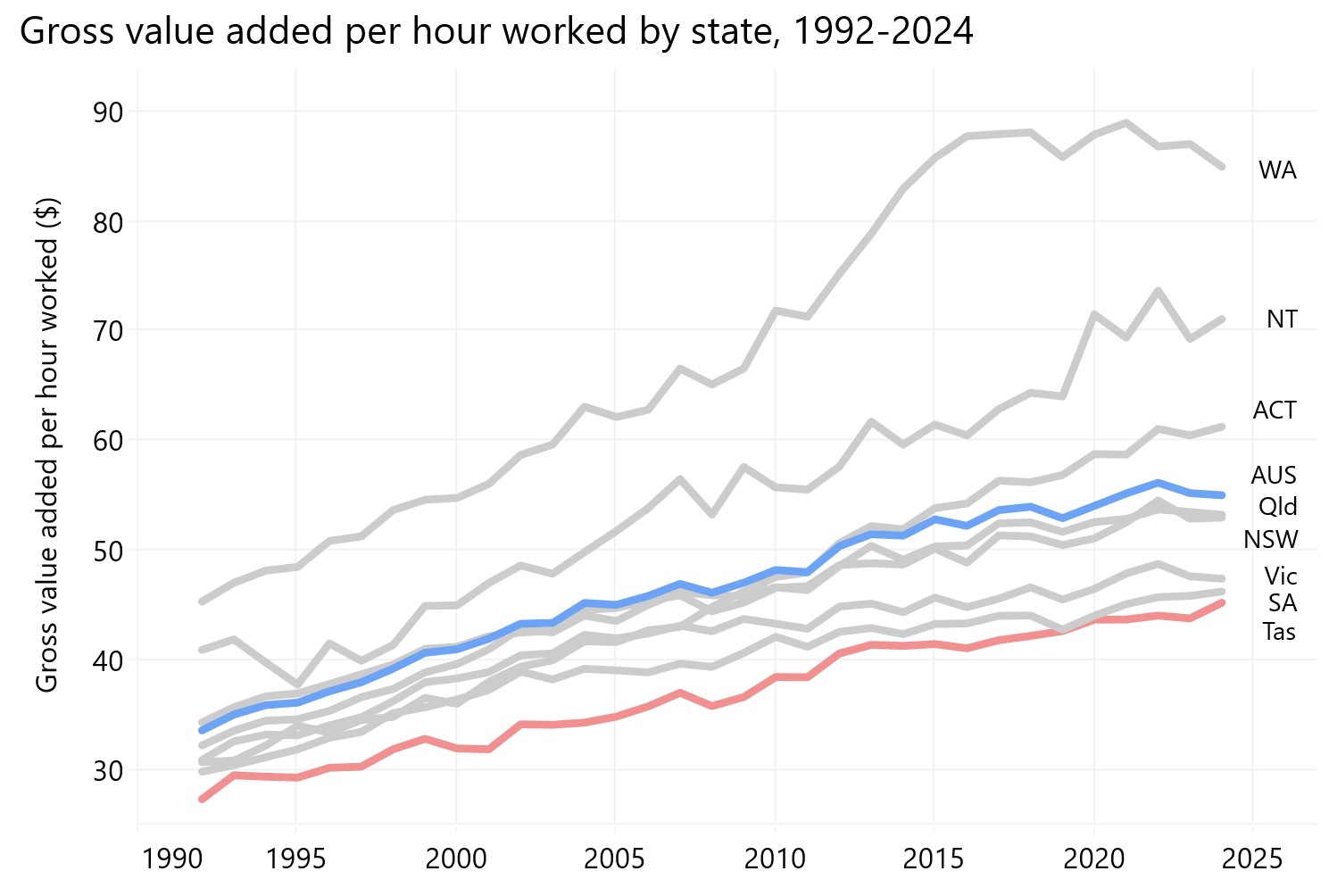
identified five key transitions to help tackle Tasmania’s biggest challenges, including productivity. This is because productivity is a critical driver of prosperity, sustainability, and quality of life. Productivity growth is a national concern, and Tasmania lags behind the rest of the country – with the gap only widening. To set the groundwork for further research, we released a
background paper explaining what productivity is, why it matters, how Tasmania is performing, and what we mean by ‘productivity with purpose’.
Takeaways:
- Productivity isn’t an end in itself – it’s a way to use our resources more sustainably and improve people’s wellbeing so we can live more fulfilling lives.
- Traditional productivity measures miss large parts of our economy and society, including unpaid care, domestic responsibilities, and service sectors like education and healthcare – which also disproportionately represent or impact women.
If you'd like to read our productivity background paper, you can find it
here!
Opportunities for Driving Down Freight Emissions
We partnered with the
Tasmanian Transport Association (TTA) to explore practical ways to cut greenhouse gas emissions in Tasmania’s road freight sector. To meet national net-zero targets, every part of the economy (including freight transport) will need to play a role.
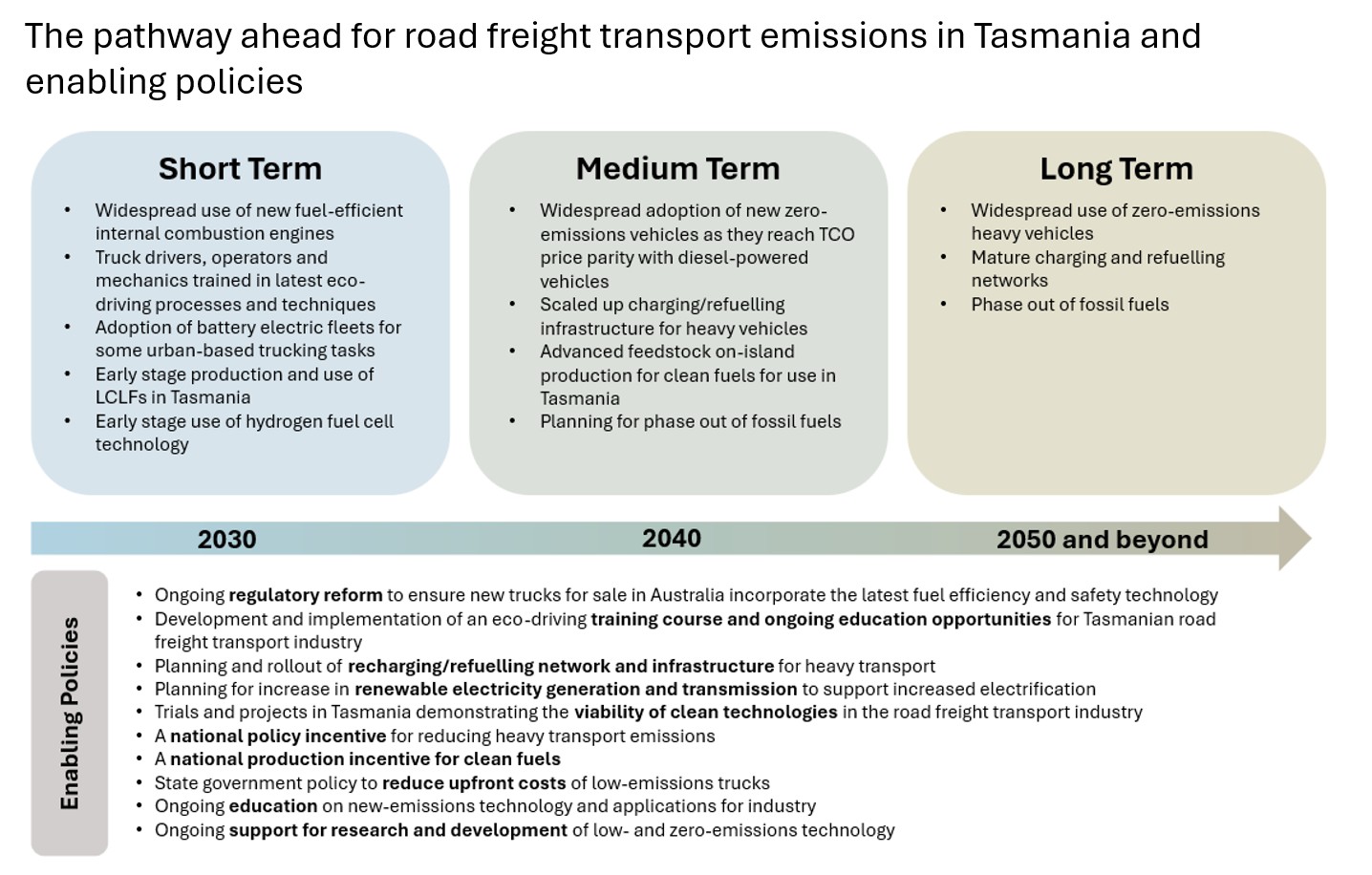
The project focused on what freight operators can do right now to cut emissions, while also mapping out medium- and long-term options. A key part of this work was developing a Tasmanian Total Cost of Ownership model to compare battery electric, renewable diesel (HVO100), and traditional diesel trucks. We also spoke with a range of industry stakeholders – from truck dealerships to clean fuel advocates – whose insights helped us map out a realistic pathway towards lower emissions.
Takeaways:
- Road freight is vital to Tasmania’s economy, and freight volumes will continue to rise – so emissions need to fall without compromising the industry.
- Battery electric trucks are the most practical emerging option, especially for urban and ‘last mile’ tasks, but high upfront costs for vehicles and charging infrastructure remain a barrier. Government incentives will be crucial.
- Renewable diesel currently isn’t cost-competitive, and developing domestic clean fuel industries would require significant investment.
We would like to thank the
TTA Board and all the other stakeholders who generously shared their expertise with us during this project.
Keep an eye on our
website to read the full and summary reports! You can also read our PIMBY on clean fuels
here.
Climate Scenarios
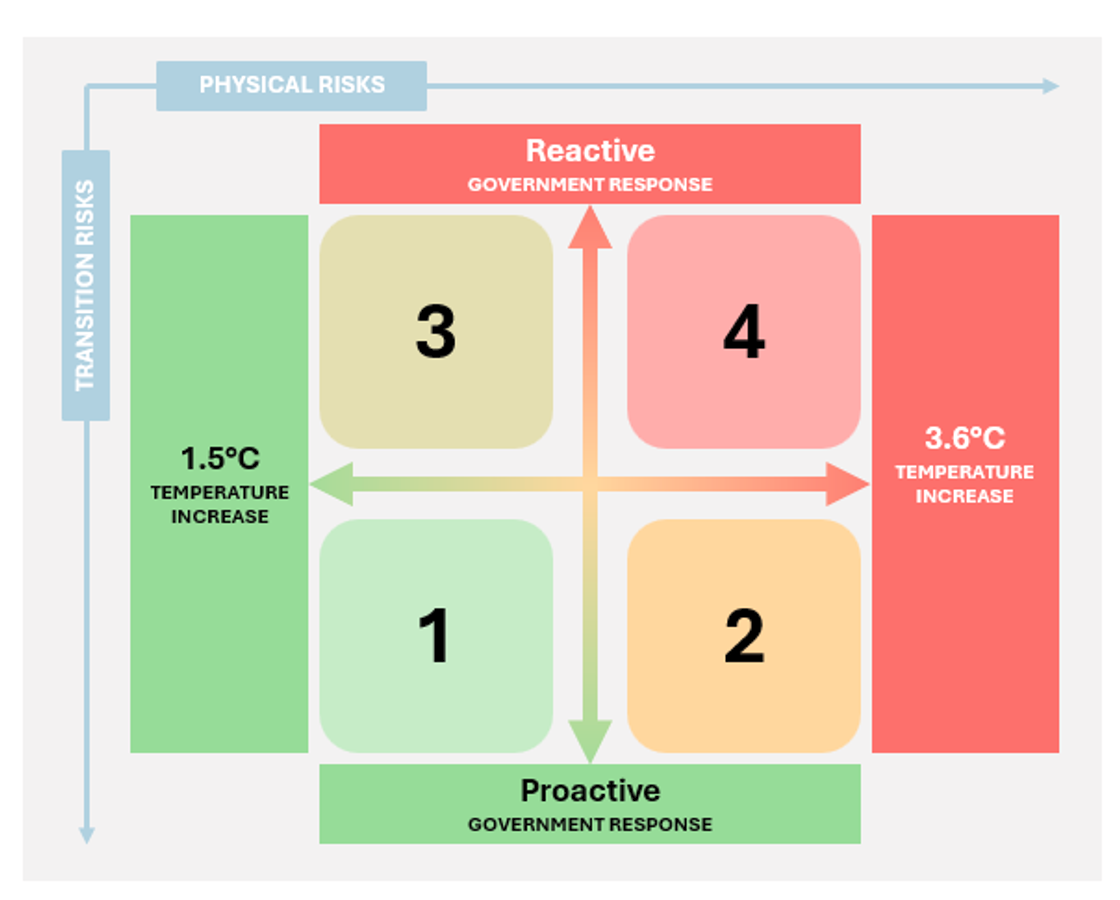
We’ve been working with several Tasmanian Government Businesses (GBs) to develop a shared set of climate scenarios for use in sustainability reporting. These scenarios aren’t forecasts, but evidence-based narratives of possible futures drawn from
national and
Tasmanian climate risk assessments and the
IPCC’s latest report.
We mapped out four scenarios, based on the nature of government policy and global temperature increases. Each scenario explores potential impacts on critical areas such as workforce, natural assets, and infrastructure. This will help GBs plan for risks and opportunities, and meet new
Australian Sustainability Reporting Standards.
Takeaways:
- We have strong national scientific datasets, but Tasmania lacks granular, locally relevant climate information – which is why we’re excited about the new Climate Projections Project.
- Even the best-case 1.5°C scenario carries significant risks for Tasmania. Preparing early will help protect vulnerable communities and support long-term resilience.
If you’re interested in learning more about these climate scenarios, keep an eye on our
website where we'll publish the final report early next year!
Thank you to the GBs involved in this work.
Meander Valley Regional Development
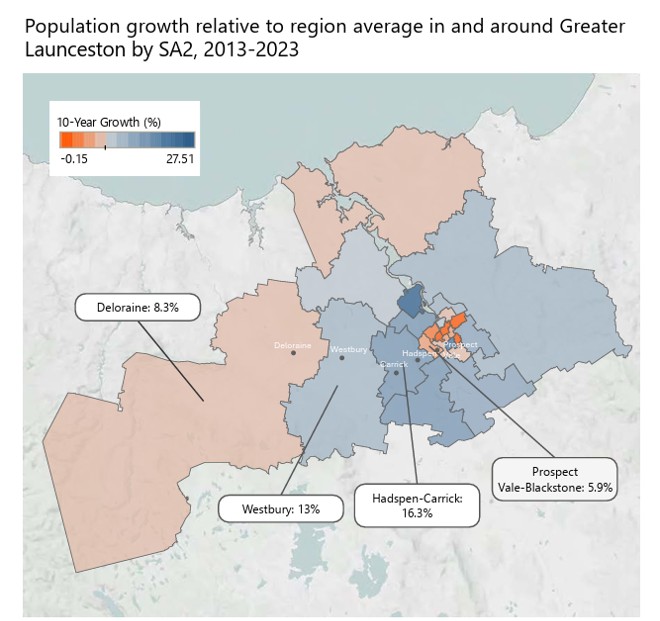
We partnered with Meander Valley Council to run an Economic Development Forum in Westbury, bringing together community, business, and government stakeholders. Together, we explored key challenges and opportunities for the region – from demographic change to agricultural innovation. From this, five priorities for sustainable growth emerged:
- New models of aged care and childcare
- Fostering community connections for newcomers
- Increased agri-business investment and innovation
- Leveraging Meander Valley’s role as a transport and logistics hub
- Planning future workforce needs through a coordinated regional skills strategy
Takeaways:
- Understanding a region’s demographic and economic profile is essential to meet the needs of the community and capture future opportunities.
- Agriculture, logistics and tourism remain strong pillars of Meander Valley’s economy – and the community is keen to embrace innovation to sustain long-term growth.
- Changes in population, migration, and ageing patterns will have important impacts on the types of services needed in the community.
We would like to thank the Meander Valley Council and all the stakeholders and community members who participated in this Forum in early February.
You can find the discussion paper
here, and the summary report with findings from the forum
here.
Forest Carbon in Tasmania
In our work with the
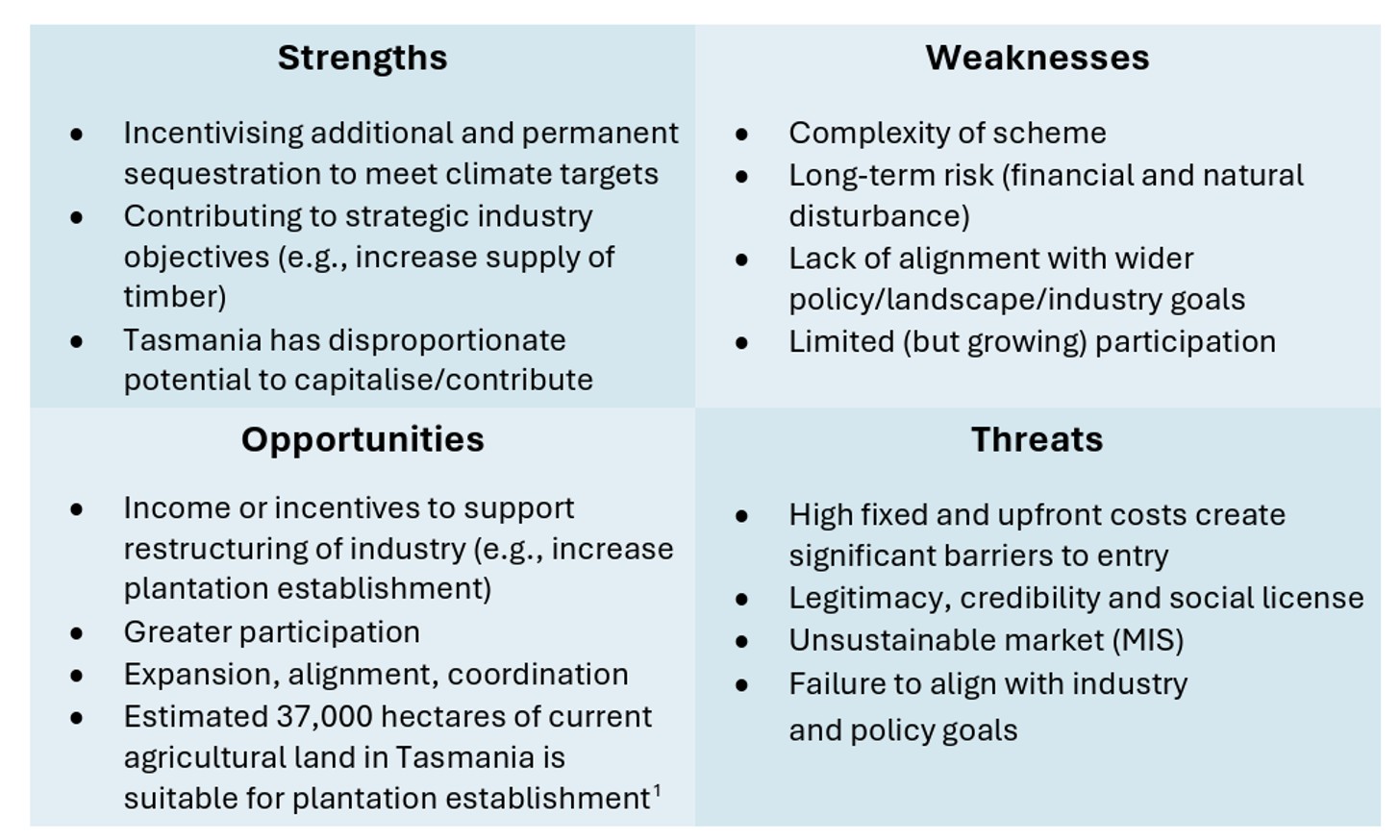
Tasmanian Forestry Hub, we looked at the barriers preventing landowners (especially smaller growers) from participating in the Australian Carbon Credit Unit (ACCU) scheme. While the ACCU scheme offers potential benefits, its complexity, high costs, and policy misalignment have limited uptake – especially for smaller plantations.
We examined approaches in other jurisdictions, including Canada’s streamlined offset methods, New Zealand’s binding emissions rulings, and Western Australia’s ACCU Plus system. We’re now testing these insights with experts and stakeholders to identify practical solutions that could boost participation in Tasmania.
Takeaways:
- Credibility and accessibility both matter. Offsets will be important for hard-to-abate industries, but projects must deliver real and additional emissions reductions.
- Better education and support would help farmers and growers understand carbon opportunities and associated co-benefits (like better water management or wind breaks for livestock).
- ACCUs can provide supplementary income, but projects still need to be viable, and locally suitable, with a sensible pathway to market – so that we avoid repeating past mistakes like the Managed Investment Scheme.
Both stages of this project were funded by the Commonwealth Government through the Tasmanian Forestry Hub.
If you’d like to learn more about this work, or the other work the Tasmanian Forestry Hub does, you can find their website
here, or get in touch with the General Manager
Tracey TaylorTamar Valley Zero
We partnered with CSIRO on a pilot project to show how social, technological, environmental, economic, and political factors could interact to shape the Tamar Valley’s transition to a zero-emissions future. Alongside government and business stakeholders, we co-developed a ‘qualitative systems map’ that reveals interdependencies and identifies leverage points – which will ultimately support better decision-making about how the region should transition.

We’re also working with a tech company to build an online interface for the map, set to launch in 2026 – so stay tuned!
Takeaways:
- Community concerns about the transition to zero emissions often stems from a lack of information and ineffective community engagement.
- Systems maps can help people to understand trade-offs and opportunities, and can strengthen support for vital new energy infrastructure projects.
Youth Jobs Strategy Outcomes Framework
In 2024, the Tasmanian Government released its ambitious and innovative
Youth Jobs Strategy, designed to improve youth engagement and participation in employment, further education and training.
Earlier this year, the TPE was commissioned to develop an ‘Outcomes Framework’ for the Strategy. Outcomes frameworks are important because they guide monitoring, evaluation and learning, facilitate data collection, and support effective program design. We worked closely with Jobs Tasmania to develop a theory of change for the Strategy, and identified indicators that can be used to assess progress.
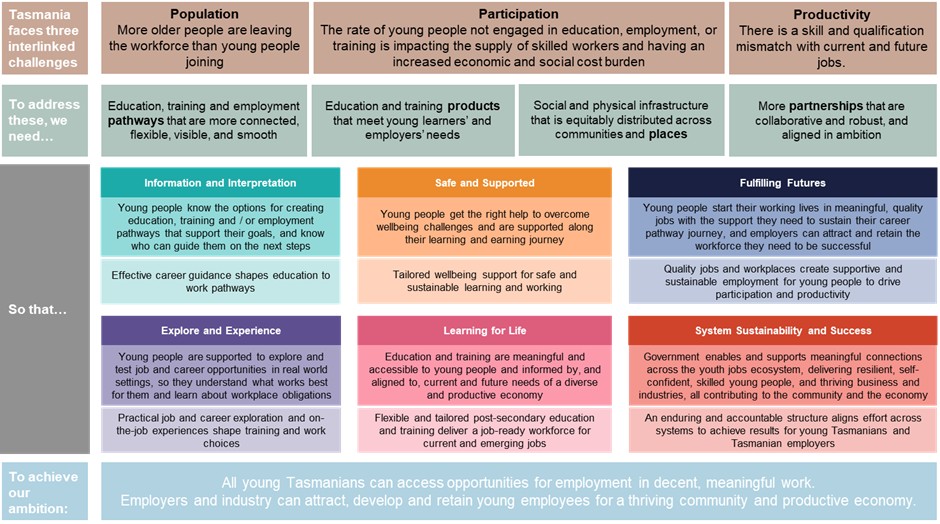
Takeaways:
- Without a clear outcomes framework, it's impossible to track progress or evaluate effectiveness in a rigorous, structured way.
- Tasmania needs to take strong policy action to ensure all young people have access to decent, meaningful work – and the Youth Jobs Strategy is an important step.
Bring on 2026
Wow – it’s been a busy year for the TPE! Across all our projects, one thing has been clear: Tasmania is changing, and so are the opportunities and challenges facing our communities.
Our climate and environmental work has demonstrated the need for immediate, but coordinated and considered, climate action. Cutting emissions in tricky sectors like trucking and industrial processes will require both innovation and pragmatism, along with careful consideration of how offsets can be used responsibly.
At the same time, we must prepare for the climate impacts already locked in. As we look ahead to 2026, our upcoming work on rising insurance costs shows just how complex and pressing these risks have become. For example, with rebuilding costs, interest rates and climate hazards all pushing premiums up, reducing bushfire risk through better planning, design and landscape management will be essential for protecting both households and long-term insurability.
We also need to understand how Tasmania’s people and regions are changing. An
ageing population and slowing population growth present real challenges – but, as Dr Lisa Denny’s work reminds us, smart policy can shape a different trajectory. Next year, we’ll continue our work with the
Future Populations Network to
help councils build the skills and tools to plan for these demographic shifts – because effective population planning is vital for Tasmania’s future.
Much like our policy work throughout the year, PIMBY has explored a range of topics – from cost of living and two elections, to emissions reduction, Marinus Link, clean fuels, GP access, and more. Thank you to everyone who has joined us, shared our work, or subscribed to PIMBY in 2025.
We look forward to seeing you back here in 2026 as we continue to explore the big challenges facing Tasmania – and the creative, evidence-based policy solutions that could make a real difference.
If you have any suggestions for future PIMBY topics, or would like to be involved as a guest writer, we’ve got a handy form
here, or you can send us an
email!
.png)


.png)